The human brain is a fascinating thing. When you really think about it, it’s terrifying that your consciousness resides in a lump of salty fat that only weighs about three pounds. The fat is tickled by electricity, and we call it thought. Protein chains form, and we call them memories. Yet, all you really are is a salty little fat ball.
My first degree was in Psychology. That was in the 90’s when we still taught that personal responsibility was the cure for addiction. My professors also felt like Prozac was a magic pill, and that it truly healed people. While I enjoyed the opportunity to navel-gaze and unravel the mysteries of my soul, I’m pretty convinced that the LSD I dropped on the weekends had more power to fix me than anything I learned from the field of Psychology in the 90’s.
I kept up on all the research, even though I veered off the therapist path and into communications for my second degree. Your local library probably has access to Lexus Nexus, meaning that you curious folks can simply get a library card and have access to all the scientific research you want. Or, if you’re more for the pre-digested content, science journals are available for free at the library, too.
The most interesting research related to who and what we are has not come from Psychology. Rather, it has come from the fields of biology and genetics.
As a teen, I tried all the things. However, I didn’t get addicted to anything. I picked up and set down addictions with an ease that made others hate me. To me, they weren’t addictive. Quitting smoking, meth, or anything else required nothing more than my desire to do so. Many people whom I loved dearly resent me to this very day for not being subject to the power of addiction.
Yet, my Psychology classes said addiction was a disease that could be overcome with willpower; the same for all people. I knew in my gut that this was wrong, and that’s why I never bothered to become a therapist. I didn’t believe I could talk people out of addiction. I’d seen the absolute power it held over others, and that no amount of will power could help them.
When we finally sequenced the human genome, I was vindicated. Sure enough, there were a variety of genetic markers that contributed to addition. After having my genome sequenced in South Korea (where your genetic blueprint stays private and cannot be sold) I was unsurprised to find that I have none of the markers for addiction.
However, it’s more complex than that, and this is where biology comes in. Full disclosure: I have actually been trying to get over microbiology since I was a kid. I took my first microbiology class when I was 17 at Paradise Valley Community College. I was avoiding chemistry, which I didn’t develop a taste for until my 20’s. I thought it would be an easy class. It was easy, but it was also the stuff of nightmares. In the words of John Oliver: “The human body is a carnival of horrors -and frankly- I’m ashamed to have one.”
Glands secrete things. Chemicals that go into your bloodstream attach to receptors in your brain and other parts of your anatomy. Hundreds of types of microscopic life lives within you, in symbiotic relationships and adversarial relationships. Herpes crawls into your nerves and lives there until you die. The bacteria from 100 dirty travelers who scratched their sweaty balls resides on the bar on the subway that you’re supposed to hold to keep from toppling into the people near you. When you kiss, bacteria eating your partners teeth hops onto your teeth and begins to feast. Worst of all, microplastics -being so foreign that your body cannot process them- accumulate in your brain, your glands, your veins, and all other parts of you, gumming up the works and making your immune system go haywire.
Your body is gross, (at a microscopic level). What is really neat is, each of us is more different than fingerprints. We react differently to medications, environments, and every other stimulus. Each of us is our very own chemical cocktail. And, while your entire frontal lobe might be overrun with dopamine receptors causing you frustrating lapses in organizational thought, I lack the receptors for opioids and those suckers do literally nothing to me. This is good when fending off heroin addiction, but a real shame when coming out of surgery and having nothing buy Tylenol to dull the pain.
As humans, we are all so different that it’s actually shocking to me that we react similarly to anything at all.
Where I am going with all of this?
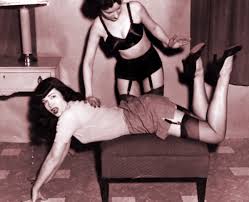
Well, science has yet to uncover what makes someone kinky, but I’m convinced that there must be something biological that explains it.

A Few Examples
• I figured out how to masturbate when I was five years old. I didn’t know a thing about sex yet, but I didn’t have to. I knew all about pain, and that is what turned me on. At first, it was only my own pain, but in my 20’s when I worked as a Dominatrix, I began to appreciate helping other people enjoy pain. However, it has to be wired into us pretty deep. I didn’t feel attracted to another person until I hit puberty. I spent 10 years masturbating to pain before I ever even felt the desire to have sex.
• Some people are drawn to kink. When they find it, it’s exciting and new, but underneath the exciting and new there is something else. Familiarity. Comfort. A feeling of finding one’s place in the world that can only come from getting to know your soul. It’s as instinctive as knowing that you’re gay, and as easy to be sure of as your own gender.
• Often kinky people try to have vanilla relationships at some point in their lives. They do this for various reasons, but that’s not what concerns me. The thing I find interesting is that even in vanilla relationships, us kinksters -myself included- tend to overlay kinky scenarios onto our sex lives so that we can still derive some kind of enjoyment from sex.
We Are Bias
I was once in a relationship with a guy who was demisexual, and really couldn’t stomach the idea of kink. I loved him very much, and going into the relationship I thought I’d “talk him into it over time.” Maybe some of you have done the same. It’s called the False Consensus Effect. Basically, you assume that because you are some type of way, others must be that way, too. You see this all the time with sexual orientation. Bisexual people always assume that everyone is at least a little bit bisexual, and hound their straight friends looking for some sign of same-sex attraction. Meanwhile, straight people often try at some point in their lives to nurture a same-sex attraction; like a woman who is “done with men” but still wants to have sex and be close to people. And yet, if you’re straight, you’re straight.
This absolutely goes for gender as well. I’m transgender, so for a long time I refused to believe that anyone was actually cis. I figured everyone had tendencies toward other genders from the one they were assigned, but they just felt unable to express those feelings due to societal pressure. Wrapping my brain around the fact that cis people exist was wild. I’m not healthy enough to transition, but I’ll always be a boy anyway.
We actually don’t have the right to take credit for most of who we are. It’s all pre-loaded. We get a gender, a neurotype, specific genes, and so much more before we’re even born. The more I study neuroscience, chemistry, biology, and genetics, the more I realize that we take a lot of credit we don’t deserve when we are proud of who we are. There is so little that we get to choose, and so much that is assigned to us.
I’m positive that kink is one of those things. I know people openly shame us for our behavior and see us as deviants. I know we’re basically looked down on by every vanilla person on Earth. But then, so are gay people and it’s not a choice for them, either.
I know in my soul that this is who I am, and that nothing in my environment or my upbringing could have changed me.
I was born this way.

 magicallydelicioussuperslut